
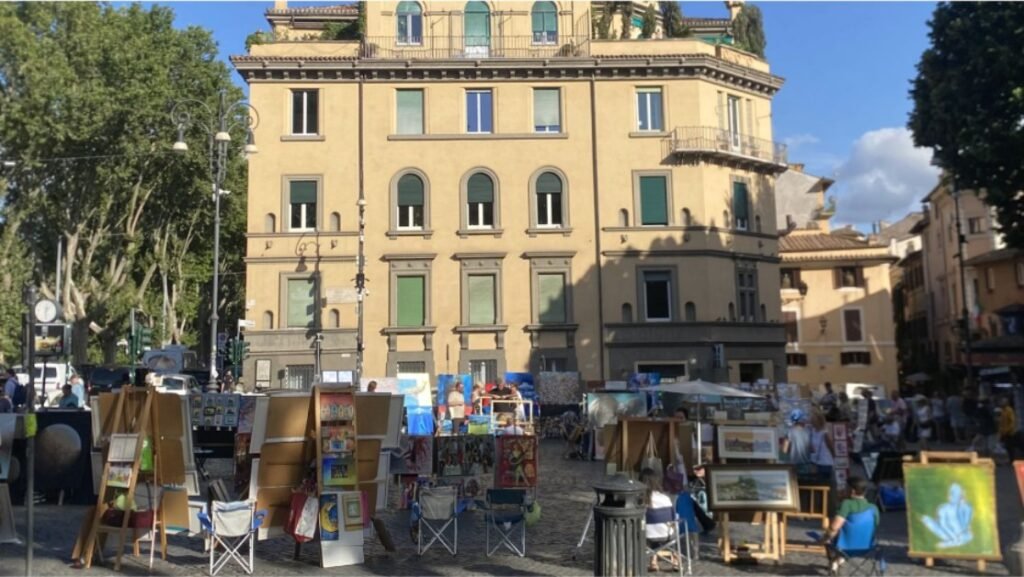
If you listen closely to the rhythm of the capital, you quickly realize that the most vibrant culture in Rome doesn’t require a booking confirmation or a credit card. While commercial tour agencies focus heavily on ticketed monumental loops, an entirely independent, deeply creative local ecosystem exists right alongside them.
From municipal libraries housed in historic industrial complexes to grass-roots associations screening original-language films under the stars, the city treats community engagement as a fundamental public good. This guide covers the absolute best independent, community-driven hubs where you can experience an authentic, free cultural event across Rome, spanning film, art, literature, and local gatherings.
The Open-Air Cinematic Associations
Rome has a legendary relationship with cinema. While traditional commercial movie houses charge standard admission, local grass-roots cultural associations step in to keep the cinematic arts completely accessible.
Il Cinema in Piazza (Fondazione Piccolo America)
This is arguably the most inspiring cultural rescue story in modern Rome. Founded by a group of young film enthusiasts who originally saved a historic neighborhood theater from being turned into commercial apartments, this independent association runs an incredible open-air summer film series. They set up massive screens across three distinct locations: Piazza San Cosimato (Trastevere), the park of Casale della Cervelletta (Toraccia), and Monte Ciocci (Valle Aurelia).
All screenings are completely free, shown in their original languages with Italian subtitles, and frequently feature open-air Q&A sessions with major international directors and actors.
Casa del Cinema (Villa Borghese)
Tucked away in the historic parklands of Villa Borghese inside the Casina delle Rose, this dedicated film institution offers free cultural programming alongside its specialized seasonal festivals. During the warmer months, their outdoor theater (Teatro All’aperto Ettore Scola) hosts fantastic retro film series, independent documentaries, and cinematic masterclasses that cost absolutely nothing to attend.
2. Permanently Free Municipal Galleries & Museums
While state-run sites are free only on select Sundays, Rome’s municipal government manages several specialized galleries that keep their permanent collections entirely open and free to the public every day of the year.
| Municipal Hub | Location | Best Known For |
| Museo Carlo Bilotti | Villa Borghese (Aranciera) | Surrealist masterpieces by Giorgio de Chirico, displayed inside an elegant, converted historic orange conservatory. |
| Museo Pietro Canonica | Villa Borghese (Fortezzuola) | The preserved private home, workspace, and incredible marble sculptures of the artist Pietro Canonica. |
| Museo delle Mura | Porta San Sebastiano | An immersive museum charting ancient engineering, allowing you to walk right through a covered gallery of the Aurelian Walls. |
| Museo Napoleonico | Piazza di Ponte Umberto I | An extensive, intimate collection of art, decorative items, and historical relics detailing the Bonaparte family’s ties to Rome. |
Libraries That Double as Architectural & Social Hubs
Rome’s public library network (Biblioteche di Roma) is an exceptional cultural asset. These spaces are far more than quiet book repositories—they are neighborhood community centers hosting free author talks, language exchanges, and art workshops.
Biblioteca Valle Aurelia
If you need a quiet workspace with an authentic neighborhood pulse, this branch offers a light-filled environment and an active cultural calendar. They frequently host free conversation groups for language learners, local book clubs, and cultural presentations aimed at connecting international travelers with local residents.
Biblioteca Enzo Tortora (San Giovanni)
Named after a celebrated Italian journalist, this highly modern library serves as a bustling multicultural gathering point. It features a beautifully curated international section and an ongoing slate of free evening activities, including community theater workshops, independent documentary screenings, and poetry readings.
Biblioteca Archeologica e di Storia dell’Arte (Palazzo Venezia)
For the dedicated historical researcher, this specialized archive situated right in the core of the city offers unparalleled access to art history texts and archaeology journals. While it requires a quick, free registration at the entrance, studying inside its timeless, book-lined halls is an incredible, cost-free Roman experience.
Independent Cultural Associations & Foundations
To truly step away from the tourist path, look to Rome’s private cultural foundations and independent associations. These spaces are funded privately or through community initiatives, meaning they offer high-caliber art experiences without demanding a ticket fee.
Fondazione Giorgio e Isa de Chirico
Located right in the bustling heart of Piazza di Spagna, the final home and studio of surrealist master Giorgio de Chirico is preserved exactly as he left it. While guided tours require an advanced reservation due to the fragile nature of the space, the foundation routinely coordinates free educational events, lectures, and academic symposiums highlighting the evolution of modern art.
Academy & Cultural Institutes (International Hubs)
Rome is home to dozens of foreign cultural academies (such as the American Academy in Rome, the British School at Rome, and the Académie de France à Rome at Villa Medici). To foster cross-cultural dialogue, these prestigious institutes frequently host open gallery nights, free classical music recitals, avant-garde art exhibitions, and architecture lectures where the general public is welcome to walk in free of charge.
Navigating Rome’s beautiful but notoriously chaotic grid can feel entirely overwhelming at first, and finding these decentralized public hubs can easily trip you up if you don’t know where to look. After spending significant time wandering these cobblestones, I’ve learned that the secret is grouping them by district. To save you the frustration of crisscrossing the city blindly, I’ve put together this personal, neighborhood-by-neighborhood directory so you can seamlessly drop these incredible cultural spots right into your daily exploration loop.
Centro Storico (The Historic Heart)
While the ancient center is heavily commercialized, it still holds a few remarkable, permanently free institutions tucked into historic structures.
- Museo Napoleonico (Piazza di Ponte Umberto I, 1): Located right by the Tiber River, just north of Piazza Navona. It’s an exceptional stop if you are already exploring the winding alleys of the historic center.
- Fondazione Giorgio e Isa de Chirico (Piazza di Spagna, 31): Situated directly on the iconic Spanish Steps plaza. It serves as an intellectual, artistic anchor amidst the high-end fashion boutiques.
- Biblioteca Archeologica e di Storia dell’Arte (Piazza Venezia, 3): Housed within the historic complex of Palazzo Venezia. It offers a majestic, silent scholarly refuge right at the city’s busiest geographic crossroads.
Villa Borghese & Pinciano
This sprawling, elegant public park functions as a massive, open-air cultural oasis. You can easily spend an entire day hopping between these free green-space hubs.
- Casa del Cinema (Largo Marcello Mastroianni, 1): Located on the southern edge of the parklands, easily accessible from the Porta Pinciana entrance.
- Museo Carlo Bilotti (Viale dell’Aranciera, 4): Tucked into the orange conservatory near the lake garden (Giardino del Lago).
- Museo Pietro Canonica (Viale Pietro Canonica, 2): Positioned near the historic fortress imitation (La Fortezzuola) in the heart of the park gardens.
Trastevere
Famous for its bohemian nightlife and ivy-draped medieval streets, Trastevere is also home to serious, grass-roots community action.
- Piazza San Cosimato (Summer Cinema Hub): Located deep in the residential core of the neighborhood, away from the river banks. This lively market square hosts the main, free summer movie series managed by Fondazione Piccolo America.
- International Cultural Academies: Ascending the nearby Janiculum Hill brings you past several magnificent foreign institutes (like the American Academy in Rome on Via Angelo Masina), which regularly coordinate public lecture nights and gallery viewings.
San Giovanni & Esquilino
These multicultural, authentic residential neighborhoods sit just past the main tourist loops of the Colosseum and Termini Station.
- Biblioteca Enzo Tortora (Via Zabaglia, 27 / Via Macedonia): Positioned within easy walking distance of the San Giovanni metro stop, this bustling community library serves as a primary multicultural hub.
- The Foreign Academies Directory: This zone balances local Italian life with an international flavor, making it a prime spot for independent documentary screenings and localized neighborhood theater workshops.
Aventino & San Saba
This tranquil, historically rich district is perfect for slow-paced wandering along the ancient defensive architecture of the city.
- Museo delle Mura (Via di Porta San Sebastiano, 18): Housed directly inside the spectacular, monumental towers of the ancient Porta San Sebastiano. It marks the absolute beginning of the historic Appian Way trail.
Mapping Out the Seasons: How to Experience Authentic Culture in Rome
To help you map everything out without losing your mind, I’ve put together this month-by-month timeline. Having a solid visual schedule is a total lifesaver for organizing your time here—especially if you’re staying long-term to slowly soak in the city rather than just rushing through on a quick holiday.
📅 The Non-Negotiable Monthly Baseline
Before we dive into the changing seasons, lock these recurring monthly dates into your calendar right now:
- First Sunday of the Month: Domenica al Museo – This is when standard admission fees vanish for all state-owned ruins and galleries. You can walk straight into the Colosseum, the Roman Forum, or Castel Sant’Angelo for absolutely nothing.
- Last Sunday of the Month: Free Vatican Sunday – Since the Vatican plays by its own rules, they waive entry fees for the Vatican Museums and the Sistine Chapel on the final Sunday of the month between 9:00 AM and 2:00 PM.
Winter
January
- The Befana Festival (Piazza Navona): Running through the first week of January, this historic, free street festival closes out the festive season. The square fills with local artisan stalls, street performers, and community puppet theaters celebrating the traditional epiphany witch, Befana.
February
- 🎭 Carnevale Romano (City Center): While Venice is famous for masks, Rome’s local cultural associations throw a brilliant, free street carnival. Head to Piazza del Popolo and Via del Corso to watch horse parades, costumed street actors, and historic commedia dell’arte theater workshops.
Spring
March
- Giornate FAI di Primavera (Spring FAI Days): Organized by the Fondo Ambiente Italiano (Italian Environmental Fund). Over one weekend, independent volunteers throw open the doors to hundreds of hidden palaces, secret private gardens, and historic villa libraries that are closed to the public the other 363 days of the year. Admission is free (donations encouraged).
April
- Natale di Roma (April 21st): The absolute peak of springtime cultural pageantry. Head to the Circus Maximus and the Roman Forum for a multi-day festival celebrating Rome’s birthday. You can watch massive costume parades, mock gladiator duels, and ancient rituals staged by the Gruppo Storico Romano.
May
- 🎷La Notte dei Musei (Mid-May): The European Night of Museums. Dozens of civic galleries, neighborhood libraries, and archaeological sites stay open from 8:00 PM until 2:00 AM. Entrance is completely free or a mere €1 token, and rooms are filled with free live jazz and choral performances.
- 🏛️ Open House Roma (Mid-to-Late May): An incredible independent architectural festival. For nine days, design associations open up hidden underground ruins, contemporary residential lofts, and secret historical archives for completely free, expert-guided tours.
Summer
June
- Estate Romana Launch (Early June): The massive, city-wide “Roman Summer” festival begins. Look out for the launch of neighborhood outdoor cinema screens in public parks and free temporary art spaces popping up along the Tiber River banks.
- 📽️ Il Cinema in Piazza Begins: The Fondazione Piccolo America kicks off its world-renowned, free open-air movie screenings. Grab a patch of cobblestone in Piazza San Cosimato (Trastevere) to watch classic films in their original language alongside international directors.
July
- Lungotevere Cultural Exhibition Walks: The banks of the Tiber River hit their peak summer stride. Walk the stone banks below street level to browse completely free photography pavilions, outdoor sculpture installations, and independent acoustic music sets.
August
- ❄️ The Miracle of the Snow (August 5th): Head to the piazza outside the Basilica of Santa Maria Maggiore. Every year, cultural groups stage a stunning midnight light-and-sound show that culminates in a spectacular mock “snowstorm” of white flower petals and artificial flakes falling from the sky to recreate a famous 4th-century summer miracle.
Autumn
September
- La Notte Bianca (White Night): On a select Saturday, the city refuses to sleep. Public squares transform into performance art stages, libraries host midnight poetry readings, and independent neighborhood blocks run street-food and live-music block parties until the sun comes up.
October
- 🎨 Rome Art Week / RAW (Late October): A massive, decentralized contemporary art explosion. Hundreds of independent neighborhood art studios, grassroots galleries, and international academies throw open their doors for free open-studio talks, exhibitions, and self-guided art walks through creative pockets like San Lorenzo.
November
- RomaEuropa Festival Free Fringe Events: While the main avant-garde theater and dance festival is ticketed, local non-profit cultural associations run a brilliant “fringe” schedule. Look out for free digital art projections, street choreography, and electronic sound installations in converted industrial spaces like Mattatoio (Testaccio).
Winter Returns
December
- 🕎 Hanukkah in the Jewish Ghetto: Head to Piazza Mattei and the historic lanes of the Ghetto. Local cultural committees host vibrant, free public celebrations, giant menorah lightings, and traditional street music, offering an incredibly warm, community-centered seasonal experience.